Chad: The Flag-Inspired Font for Bold Projects
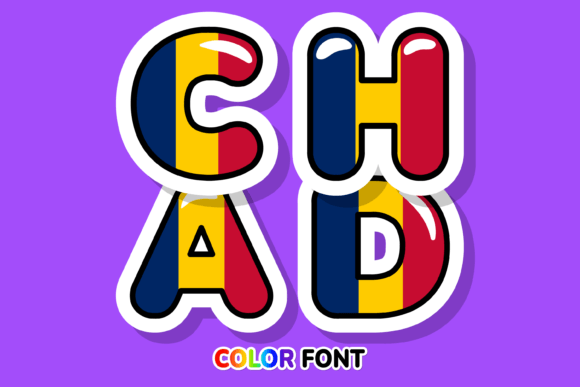
In the world of design, a typeface is rarely just a collection of letters. It carries weight, history, and emotion. When you encounter Chad, you are looking at more than a premium font; you are engaging with a piece of visual culture. This display font draws its inspiration directly from the national flag of Chad, translating the vibrant blue, yellow, and red stripes into a typographic experience that feels both patriotic and universally modern. It is a creative font designed for those moments when you need to make a statement that is impossible to ignore.
The visual architecture of Chad is defined by its bold, structured lines and distinct color blocking. Unlike a standard serif font or a clean sans serif font, Chad uses color as a structural element rather than a mere overlay. The letterforms are solid and confident, often featuring geometric precision that echoes the order of a waving flag. There is a rhythm to the text when set in Chad; the alternating hues create a sense of movement and energy. It avoids the fluidity of a script font or the casual scratch of a handwritten font, opting instead for a modern typography approach that commands attention through sheer visual volume.
Integrating the Chad Typeface into Real-World Projects
For designers and business owners, the question is never just "does this look good?" but rather "does this work?" Chad shines in specific environments where high impact is the primary goal. If you are working on logo design for a sports team, a dynamic startup, or an event that requires a burst of energy, Chad provides an instant visual identity. It serves as a foundational element for brand identity, particularly for brands that want to project strength, heritage, or a connection to Central African aesthetics.
Consider the field of packaging design. A product sitting on a crowded shelf has roughly three seconds to catch a shopper's eye. Using a standard corporate font often results in the product blending into the background. However, applying Chad to the product name or key descriptors can break that visual monotony. It works exceptionally well for limited-edition releases, sports merchandise, or youth-oriented products. The font’s inherent color scheme suggests festivity and celebration, making it a strong candidate for event invitations, festival posters, and concert merchandise.
In the realm of editorial design, Chad requires a bit more finesse. You likely wouldn't use it for the body text of a 300-page novel, as the colors would become fatiguing to the eye over long reading sessions. Instead, it is perfectly suited for magazine covers, pull quotes, chapter headers, or feature article titles. When used in web design, it can serve as a hero text element on a landing page, immediately establishing the tone before the user scrolls down to more neutral reading material.
The Psychology of Color and Form in Typography
Understanding how Chad influences your audience requires a look at visual hierarchy and brand perception. In modern typography, hierarchy is established through size, weight, and contrast. Chad adds a fourth dimension: color. Because the font is inherently colorful, it naturally sits at the top of the visual hierarchy. Your audience will read the Chad text first because it is the loudest element on the page.
This characteristic makes it a powerful tool for social media graphics. In a fast-scrolling environment, text needs to be legible at a glance. The high contrast of the Chad color palette ensures that your message pops against standard social media backgrounds. However, this brings us to a critical consideration: readability. While Chad is excellent for short bursts of text—headlines, slogans, and call-to-action buttons—it can hinder audience engagement if overused. If a user has to strain to decipher a paragraph written in a complex display typeface, they will likely click away. Therefore, pairing Chad with a neutral companion font is essential for maintaining professionalism.
Practical Guidance for Designers and Creatives
Choosing the right font involves more than just aesthetics; it involves evaluating the specific needs of your project. If you are a crafter working on DIY projects, Chad offers a unique texture that standard vinyl cutters and printers can handle well, provided the sizing is appropriate. For entrepreneurs and marketers, the font acts as a design asset that can unify a campaign across different mediums.
When testing font pairings, look for balance. Since Chad is bold, geometric, and colorful, it pairs best with typefaces that are quiet and understated. A clean sans serif font like Helvetica, Roboto, or Open Sans makes an excellent partner for body text. The neutrality of these fonts allows the personality of Chad to shine without creating visual chaos. Avoid pairing it with another display font or a highly decorative script font, as the two will compete for attention, resulting in a cluttered design.
Before finalizing your design, review the included styles and licensing. As a commercial font, Chad comes with specific usage rights. Ensure that your license covers your intended application, whether that is for a client’s logo, a mass-produced t-shirt line, or a digital product. Check the file formats to ensure compatibility with your software, whether you are using Adobe Illustrator, Photoshop, Canva, or Procreate.
Finally, consider the emotional resonance of the colors. While the font is styled after the Chad flag, the combination of blue, yellow, and red is universal in its appeal. It suggests energy (red), optimism (yellow), and stability (blue). By leveraging Chad in your next project, you are not just choosing a typeface; you are choosing a mood. It is a versatile tool for anyone looking to inject a sense of bold identity into their work, from web design to physical merchandise.