The Ireland Font: A Premium Typeface for Irish-Inspired Branding
Finding a typeface that captures a specific cultural essence without feeling like a novelty can be a challenge. Too often, themed fonts sacrifice functionality for flair, leaving you with a design asset that is more gimmick than tool. The Ireland font, however, manages this balance with remarkable success. It is a premium font designed with the visual rhythm and color palette of the Irish tricolor in mind, offering a unique blend of modern typography and national pride.
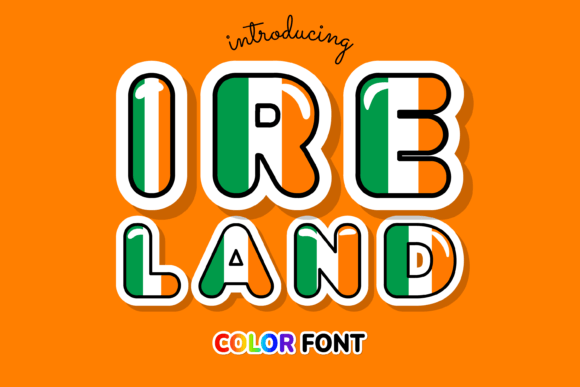
At its core, Ireland is a display font with a strong personality. Its letterforms are clean and contemporary, yet they carry a subtle warmth and character that feels distinctly Irish. The most striking feature is its color capability. While it works perfectly as a solid, single-color typeface, its true potential is unlocked when you use it with its built-in color layers. These layers allow you to render the letters in the iconic green, white, and orange of the Irish flag, creating an instant and unmistakable connection to Irish heritage. This isn't a simple overlay; the design is integrated, ensuring the colors enhance the legibility and impact of each glyph.
The overall style sits at an interesting intersection. It is not a traditional serif font with small decorative strokes, nor is it a sterile sans serif font. Instead, it feels like a modern script font that has been carefully constructed for clarity. There is a flowing quality to some of the curves, reminiscent of Celtic knotwork, but it is restrained enough to avoid the pitfalls of overly ornate handwritten fonts. This gives it a versatile appeal—it can feel celebratory for a St. Patrick's Day campaign, or dignified and professional for an Irish-themed brand identity.
Strategic Applications for the Ireland Typeface
Knowing where a creative font like Ireland truly shines is key to using it effectively. Its strength lies in projects where a specific cultural message needs to be communicated quickly and visually. Think of it as a design shortcut for evoking Irish charm, community, and authenticity.
For brand identity and logo design, the Ireland font can be a cornerstone for businesses rooted in Irish culture. An artisanal food producer, a local pub, a tourism company, or a boutique selling Irish crafts could use it to create a logo that is both distinctive and immediately meaningful. The color version works beautifully on packaging, while a single-color version (perhaps in a deep green or rich orange) maintains the brand's essence across more conservative applications like business cards or letterheads.
In editorial design and packaging design, it excels as a headline or accent font. Imagine the title of a cookbook on Irish baking, the cover of a magazine feature on Dublin, or the label for a craft beer with a Celtic name. The Ireland typeface sets the scene instantly. It pairs well with a clean, neutral sans serif for body text, creating a clear visual hierarchy where the headline carries the thematic weight while the body copy remains effortlessly readable.
Digital applications are equally powerful. For web design, use it in hero sections for event pages, tourism sites, or online stores catering to the Irish diaspora. Its impact on social media graphics is significant; a post promoting a virtual Irish festival or a recipe for soda bread will stop the scroll with this font in the headline. The key is to use it purposefully—perhaps for the main call-to-action or the event name—not for every piece of text, which could overwhelm the viewer.
Practical Guidance for Designers and Creators
Adopting any new typeface into your workflow requires a bit of strategy. Here’s how to approach the Ireland font to ensure it enhances, rather than complicates, your projects.
First, always consider your audience and the project's tone. The Ireland font is perfect for projects targeting adults 20–50 who appreciate Irish culture, whether they are designers, marketers, or hobbyists. It communicates a sense of shared identity and celebration. For a more formal corporate project, you might reserve it for a single accent element, like a divider or an initial cap, rather than for the main body of text.
Next, font pairing is critical. Because Ireland has such a distinct personality, it needs a partner that can support it without competing. A geometric sans serif font like Montserrat or a humanist sans serif like Gill Sans often works well, providing a clean and modern counterbalance. For a more classic feel, a simple serif font like Georgia or a contemporary slab serif could complement it. Always test your pairings in context—see how they look at the sizes you'll be using, both on screen and in print.
Evaluate the font's full range of styles. A quality premium font like this often includes more than just the basic alphabet. Look for additional numerals, punctuation, and, most importantly, multilingual support that covers Irish Gaelic characters like the síneadh fada (acute accent). This is non-negotiable for authentic usage. Also, check for different weights or stylistic alternates that might give you more flexibility within the same typeface family.
Finally, address readability and licensing head-on. As a display font, Ireland is best suited for headlines, titles, and short bursts of text. Setting a full paragraph in it, especially in its color version, will likely reduce readability. For body copy, always choose a font optimized for long-form reading. Regarding licensing, ensure you are clear on the terms. Most commercial licenses for design assets like this are purchased once and cover a wide range of uses, from print to digital to merchandise. Verify that the license aligns with your intended use, especially if you are creating products for sale or using it for a client's brand identity.
The Ireland font is more than just a decorative tool; it is a strategic design asset. Used thoughtfully, it can inject a project with genuine cultural resonance, connect with a specific audience on an emotional level, and elevate a brand's visual storytelling. It demonstrates that modern typography can be both functional and deeply expressive, offering a bridge between design and heritage that is both practical and inspiring.